epanet-js
No installs. No forced cloud storage. Just fast, local-first water modeling — powered by the engine you already trust.
You shouldn't have to choose between speed, security, and affordability just to understand your water networks.


Today, the Korean OSR2.5 ISO is sought after by:
To run a Korean Windows 95 OSR 2.5 repack effectively today, you generally need to emulate a system with: Intel Pentium MMX or early Pentium II.
: Approximately 119 MB to 120 MB for a "clean" installation disc Full Repack Size windows 95 osr25 korean iso repack
The Korean version of Windows 95 OSR2.5 utilizes an extension of the EUC-KR encoding system known as Unified Hangul Code (MS 949). This allowed Windows 95 to display all 11,172 possible Hangul syllables, a massive upgrade over older DOS-era Korean extensions. 2. MS-DOS 7.10 Korean Subsystem
Original Windows 95 CDs were often not bootable on their own. They required a separate 3.5-inch floppy boot disk containing MS-DOS CD-ROM drivers to kickstart the setup process. Modern repacks inject a boot loader directly into the ISO image, allowing you to install the OS directly from the optical drive or virtual disk without needing a separate floppy image. 2. Built-In Driver Patches Today, the Korean OSR2
Exploring Windows 95 OSR 2.5: The Definitive Korean ISO Repack
If the ISO doesn't auto-partition, use FDISK within the DOS prompt to create a FAT32 partition. Note: Ensure FAT32 support is enabled. Modern repacks inject a boot loader directly into
Running older software or localized installers often required precise ANSI/OEM code page configurations (Code Page 949) that standard Western releases simply could not interpret without throwing kernel exceptions. Why Enthusiasts Turn to a "Repack" ISO
For vintage computing enthusiasts and retro gamers, represents the absolute pinnacle of the 9x era. It was the final retail-adjacent refinement before Windows 98 took over, blending the iconic "grey taskbar" aesthetic with modern features like USB support and FAT32.
Repacks sometimes include bootable ISO images, bypassing the need for a separate startup floppy disk.
Early implementation of Universal Serial Bus (USB) drivers, though still in its infancy. The Korean ISO Repack
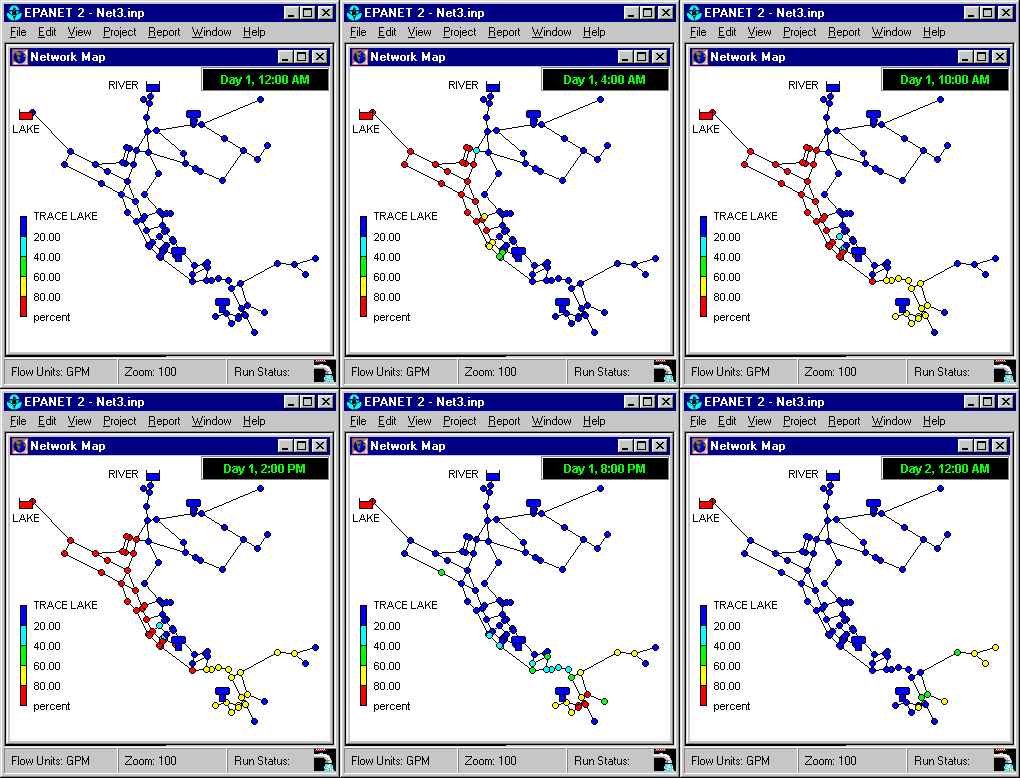
No setup or downloads — just instant access right in your browser.
EPANET was a gift to the industry — free, open-source water modeling for all. But commercial vendors built on it, locked away improvements, and left the community behind.
epanet-js is our answer: a faster, simpler, affordable water modeling tool that protects your privacy and sustains the open-source future of water modeling.
We're proud to be part of the next chapter — and we're just getting started.

When you purchase more features in epanet-js, you're investing in the future of open-source EPANET development.
Our open-source model balances innovation and accessibility:
Anyone can build on our code. The two-year commercial-use delay gives us the incentive to keep pushing forward — and that fuels progress for everyone.
That means when you support us, you support more affordable hydraulic modeling software for the entire community.
Choose the plan that works for you
Individual named license
Floating shared license
Have questions? or book a call.
Available for non-commercial projects, learning, and student work.
For curious minds and personal growth.
Free for students and teachers.
Find answers to common questions about epanet-js.
No install. No login. No cloud required.
You may not know this, but for decades, the U.S. EPA has given the water industry an extraordinary gift: the free and open-source hydraulic modeling software EPANET. Odds are, if you've used any commercial hydraulic modeling software today, it was built on the EPANET engine.
The problem is, instead of giving back to their open-source roots like other industries do, big-name software vendors took EPANET's open code, built private tools on top of the engine, and then locked those improvements behind patents and proprietary licenses.
Some vendors even pressured the EPA to focus only on the engine — discouraging any effort to improve the interface or user experience for everyone else.
Those vendors now charge you exorbitant prices to use their software while EPANET lags behind — and utilities, engineers, and educators with smaller budgets suffer.
We think this is backwards — and we're on a mission to change it. We're focused on creating a better experience for the entire hydraulic modeling community.
That's why we built epanet-js under an FSL license — because we want to give you an affordable, easy-to-use water modeling option that creates a sustainable future for open-source EPANET development.
Support EPANET by using software that supports it back.
Simple, quick, and useful right out of the gate — designed to open-and-go.
Launch epanet-js now