Transfixedofficemsconductxxx720phevcx265 Free [portable]

Subversion Client for Mac

Versions² offers the best way to work with
Subversion on the Mac. Thanks to its clear-cut
approach, you'll hit the ground running.

Versions' award winning interface lets you unravel any Subversion project in seconds.

  • Developers
    Collaborate seamlessly on multiple projects and enjoy the full power of a simple to use version control system.
  • Designers
    Easily revert to previous versions of artwork and keep a full history of your work.
  • Managers
    Keep tabs on the progress of all projects and easily integrate with ticketing systems.
  • Editors
    Experiment! Change first person to third? Change the point of view? Track changes on anything, from anyone, at any time.

New to Subversion?

Don't panic. Versions makes Subversion easy. Even if you're new to version control systems altogether. Commit your work, stay up to date, and easily track changes to your files. All from Versions' pleasant, true to the Mac interface.

Why Version Control instead of Dropbox?

File syncing services work well for sharing files, but they are not meant for two people editing the same file. With Version Control one person changing a file can never unknowingly overwrite changes made by another person.
New in Versions²
Fresh UI

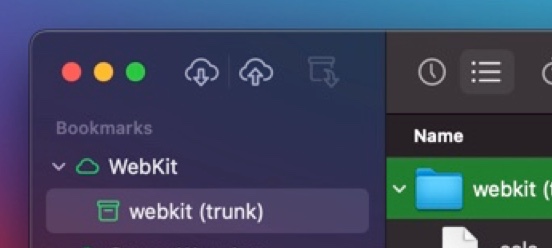
Fresh macOS Look & Feel

Versions received the first bold user interface refresh in 10 years. From a new app icon, a re­vamped tool­bar to support for the gor­geous Dark Appearance, Versions² fully embraces modern macOS.
Inline Actions

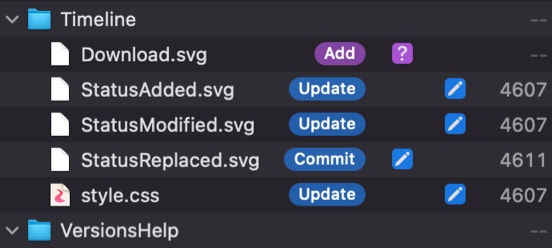
Inline Actions

While Subversion offers many features, your typical workday consists of only executing the same few actions over. Versions² offers those, right when you need them, right where you need them.
Apple M1 Chip

Native on Apple silicon

Versions² is optimized for smooth operation on new Macs with M-series chips and also includes an up-to-date Subversion library for optimum security and fidelity.

Working Copy View

  • New: Convenient inline buttons offering the most frequent actions, right there when you need them.
  • Support for all common Subversion commands
  • Single click to compare local changes
  • Or compare any two revisions of a file
  • Show all files and folders, or changes only
  • Revert to a specific revision
  • View or ignore remote updates
  • Lock and unlock from the Browse view
  • Set svn:ignore and other properties

Timeline

  • Clear overview of all revisions by date With author names and lists of changed items
  • Automatically link ticket numbers In commit messages to your issue tracker
  • Click any changed file to see a comparison
  • View as many revisions as you like

Repository View

  • Browse and manipulate repositories Without checking them out
  • Drag & drop folders within a repository To move or copy them
  • Drag in a file or folder from the Finder To import it, and out to export it
  • Easily set file and folder properties
  • Browse any previous revision
  • Checkout and export from any revision
  • Double-click any file to open a copy

Cable television fragmented the audience. MTV targeted youth; CNN targeted news junkies; ESPN targeted sports fans. Suddenly, began to cater to subcultures. However, the schedule still dictated viewing habits. Popular media was still something you watched at a specific time .

The most viral "content" often isn't true. Conspiracy theories are structured like mystery box thrillers (à la Lost or True Detective ). They have villains, heroes, and "clues." Because popular media algorithms reward engagement, a sensational lie travels faster than a boring truth.

[Content Creation] ──> [Algorithmic Distribution] ──> [Audience Engagement] ^ │ └───────────────── Data Feedback Loop ───────────────┘ Monetization Models

Popular media has transitioned through three distinct eras, each defined by technological capability and user agency.

This creates an immersive ecosystem where fans can "live" within their favorite stories. Franchises like Marvel, Star Wars, and The Last of Us leverage this to maintain engagement year-round, turning casual viewers into dedicated lifelong fans. The Future: AI, VR, and the Metaverse

Popular media acts as both a mirror reflecting societal values and a hammer shaping them. The continuous consumption of entertainment content influences public discourse in several distinct ways:

To help tailor this material for your specific platform, tell me:

User-generated content dominates consumer screen time. Smartphone cameras and free editing software allow anyone to become a creator. Independent artists bypass traditional Hollywood gatekeepers to find global audiences. Globalization and Localization

: Encompasses traditional TV shows, cable, and streaming services.

Today’s popular media landscape is not a monolith. It is an ecosystem of distinct but overlapping content types.

Technology remains the primary catalyst for changes in popular media. The "streaming wars" over the past decade completely revolutionized film and television consumption, prioritizing on-demand access and binge-watching over scheduled linear television.

Streaming platforms distribute localized content to global audiences instantly. A series produced in South Korea or Spain can become a worldwide cultural phenomenon overnight, fostering cross-cultural empathy and creating a shared global media vocabulary.

Television networks and movie theaters controlled global media distribution.

Transfixedofficemsconductxxx720phevcx265 Free [portable]

Cable television fragmented the audience. MTV targeted youth; CNN targeted news junkies; ESPN targeted sports fans. Suddenly, began to cater to subcultures. However, the schedule still dictated viewing habits. Popular media was still something you watched at a specific time .

The most viral "content" often isn't true. Conspiracy theories are structured like mystery box thrillers (à la Lost or True Detective ). They have villains, heroes, and "clues." Because popular media algorithms reward engagement, a sensational lie travels faster than a boring truth.

[Content Creation] ──> [Algorithmic Distribution] ──> [Audience Engagement] ^ │ └───────────────── Data Feedback Loop ───────────────┘ Monetization Models

Popular media has transitioned through three distinct eras, each defined by technological capability and user agency. transfixedofficemsconductxxx720phevcx265 free

This creates an immersive ecosystem where fans can "live" within their favorite stories. Franchises like Marvel, Star Wars, and The Last of Us leverage this to maintain engagement year-round, turning casual viewers into dedicated lifelong fans. The Future: AI, VR, and the Metaverse

Popular media acts as both a mirror reflecting societal values and a hammer shaping them. The continuous consumption of entertainment content influences public discourse in several distinct ways:

To help tailor this material for your specific platform, tell me: Cable television fragmented the audience

User-generated content dominates consumer screen time. Smartphone cameras and free editing software allow anyone to become a creator. Independent artists bypass traditional Hollywood gatekeepers to find global audiences. Globalization and Localization

: Encompasses traditional TV shows, cable, and streaming services.

Today’s popular media landscape is not a monolith. It is an ecosystem of distinct but overlapping content types. However, the schedule still dictated viewing habits

Technology remains the primary catalyst for changes in popular media. The "streaming wars" over the past decade completely revolutionized film and television consumption, prioritizing on-demand access and binge-watching over scheduled linear television.

Streaming platforms distribute localized content to global audiences instantly. A series produced in South Korea or Spain can become a worldwide cultural phenomenon overnight, fostering cross-cultural empathy and creating a shared global media vocabulary.

Television networks and movie theaters controlled global media distribution.