Hot Mallu Aunty Deepa Unnimery Seducing Scene B Grade Movie Exclusive Fix -
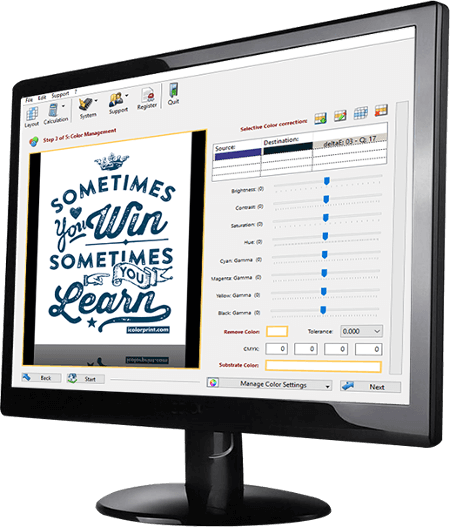
UNINET® has developed a series of software packages to enhance your IColor printing experience. The IColor® TransferRIP and ProRIP and ProRIP Essentials packages make it simple to produce spot color overprint and underprint in one pass. The Absolute White RIP helps you use an Absolute White Toner Cartridge in a converted CMYK printer, and create 2 pass prints with color and white. The IColor® SmartCUT suite allows your A4/Letter sized printer to produce tabloid or larger sized transfers! Use one or more with the IColor® 500, 600 and 800 series of transfer printers.
Use the IColor® ProRIP software to print white as an underprint or overprint in one pass.
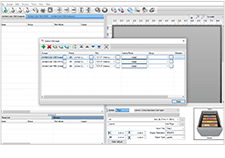
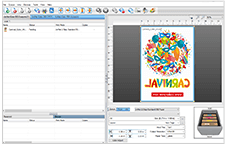
This professional version is designed for higher volume printing with an all new interface. Design files can be printed directly from your favorite graphics program, as well as imported directly into IColor® ProRIP.
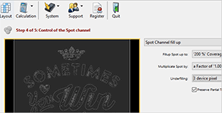
The IColor® ProRIP software allows the user to control the spot white channel feature. Three cartridge configurations are available: Spot color overprinting, where white is needed as a top color for textiles; Spot color underprinting for printing on dark or transparent media where white is needed as a background color and standard CMYK printing where a spot color is not needed. No need to create additional graphics with different color configurations – the software does it all – and in one pass! Enhance the brilliance of any graphic with white behind color!
Compatible with Microsoft Windows® 8 / 10 / 11 (x32 & x64) only.
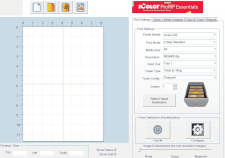
A simplified version of ProRIP which includes all of the most commonly used features of ProRIP with an easy to use interface. This Essentials version simplifies the printing process and allows the user to print efficiently and quickly without any training. All of the important and frequently used aspects of the software are included in this version, while all of the ‘never used’ or confusing aspects of the software are left out.
Comes standard with the IColor®540 and 560 models and is compatible with the IColor 550 as well.
Does not work with IColor 500, 600, 650 or 800 (yet).
Improvements over the ‘Standard’ ProRIP:
The mid-1970s through the 1990s are widely regarded as the of Malayalam cinema. This era saw:
The 90s also saw the rise of the Gulf Malayali . Movies like Godfather (1991) and In Harihar Nagar (1990) acknowledged that half of Kerala’s economy ran on remittances from the Gulf, portraying the Gulfan (returnee) as both a comic figure of excess and a tragic figure of alienation.
Mohanlal mastered the art of the flawed, relatable common man, blending impeccable comedic timing with intense drama ( Kireedam , Bhramaram ). Mammootty excelled in intense, complex character studies, often portraying rigid, deeply flawed patriarchs or historically significant figures ( Oru Vadakkan Veeragatha , Vidheyan , and more recently, Bramayugam ).
The golden era of comedy (late 80s to early 2000s) introduced legends like Jagathy Sreekumar, Innocent, and Srinivasan. Their dialogues weren't just jokes; they were sociological commentaries. When Srinivasan in Aram + Aram = Kinnaram mumbled about casteism hidden within vegetarianism, he was reflecting the deep-seated hypocrisies of the upper-caste Nair and Namboodiri communities. Later, writers like Sreenivasan mastered the art of the "loudspeaker dialogue"—a monologue that simultaneously entertains and educates the public on political economics, a staple of Kerala’s chaya kadas (tea shops). The mid-1970s through the 1990s are widely regarded
In the southern corner of India, kissed by the Arabian Sea and veined with backwaters, exists a cinematic phenomenon that stands apart from the song-and-dance spectacle of mainstream Bollywood or the hyper-masculine heroism of Tollywood. Malayalam cinema, or ‘Mollywood’, is not merely an entertainment industry; it is the cultural diary of Kerala. For nearly a century, it has been a space where social reform, political satire, and raw humanism intersect.
The language itself plays a vital role. Malayalam cinema celebrates the linguistic diversity of the state, showcasing distinct regional dialects—from the Thrissur slang in Pranchiyettan & the Saint to the northern Malabar dialect in Thallumaala .
While celebrated for its artistry, the relationship between Malayalam cinema and culture remains dynamic and sometimes contentious. Mohanlal mastered the art of the flawed, relatable
. It has consistently engaged with Kerala's complex realities:
in 1928, it has grown into a powerhouse known for realistic storytelling, technical finesse, and deep intellectual engagement.
The journey began with the first silent feature, Vigathakumaran (1928), and the first talkie, Balan (1938). Unlike many other Indian industries that leaned toward mythology, Malayalam cinema quickly pivoted toward social realism. Their dialogues weren't just jokes; they were sociological
, the "father of Malayalam cinema," who produced the first silent film, Vigathakumaran , in 1928. The industry's early years were shaped by: Literary Roots:
The 2010s marked a major shift known as the "New Generation" movement. This phase saw a break from the conventional hero-centric narratives of the 1980s and 90s, focusing on innovative storylines, experimental filmmaking techniques, and strong ensemble casts. This shift has made Malayalam cinema highly relevant to a global audience, with many films gaining acclaim on international platforms. Conclusion
In Thondimuthalum Driksakshiyum (2017), the oppressive heat and the dry, reddish soil of Kasargod create a sense of desperation. In Jallikattu (2019), the claustrophobic, chaotic vibe of a Panchayat market is chaotic. The culture of Kerala monsoon (the chillu rain) is used not romantically, but to highlight decay, mold, and the claustrophobia of joint families.
: In the early 1980s, the "comedy track" evolved into full-length movies like Ramji Rao Speaking , reflecting shifts in . Modern Deconstruction : Recent films like Kumbalangi Nights
UNINET offers the opportunity of white toner printing for everyday CMYK laser printers – this option is for those that may not be quite ready to make the jump to an IColor Printer.
UNINET’s Absolute White Toner Cartridges allow you to convert your compatible printer into a white toner printer! Simply swap the black cartridge that shipped with the printer and replace with the Uninet Absolute White toner. Print in 100% monochrome for white images and text.
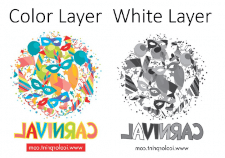
Up until now, printing FULL color images for transfer has been a challenge because you have to design a specific white overprint layer in addition to the color layer, and run the transfer paper through the printer twice, and rely on the printer to line up the images on the same page. Most users only print white image for this reason. This is a tedious process that previously required advanced editing software and knowledge.
UNINET's Absolute White RIP does it all for you! It will analyze a full color image, and then create a matching white layer (with automatic choke) to make 2 pass printing as easy and reliable as possible.
Transfer paper is fed through the printer twice, but all of the manual design work required to do this efficiently is now automated.
A free license is included with all UNINET Absolute White branded white cartridges (for printers other than IColor), which will have a page count limitation matching the yield of the cartridge purchased. When the page counter depletes, simply purchase a new Absolute White cartridge and the page counter is refreshed.
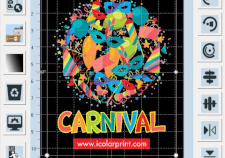
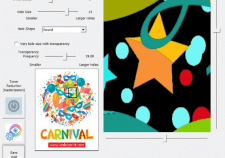
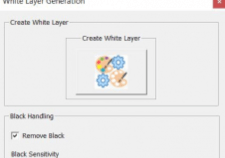
Use the IColor® TransferRIP software to print white as an underprint or overprint in one pass.
Designed for every day, short to mid run use, the IColor® TransferRIP software allows the user to control the spot white channel feature. Two cartridge configurations are available: White overprint, where white is needed as a top color for textiles; and white underprint for printing on dark or transparent media where white is needed a round color. No need to create additional graphics with different color configurations – the software does it all – and in one pass! Enhance the brilliance of any graphic with white behind color!
Compatible with Microsoft Windows 7 / 8 / 10 (x32 & x64) only.