Autoit Script Decompiler Free //top\\ Full
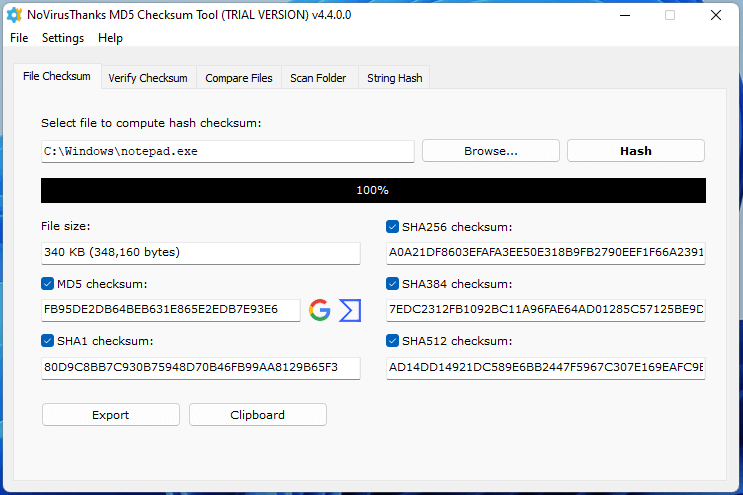
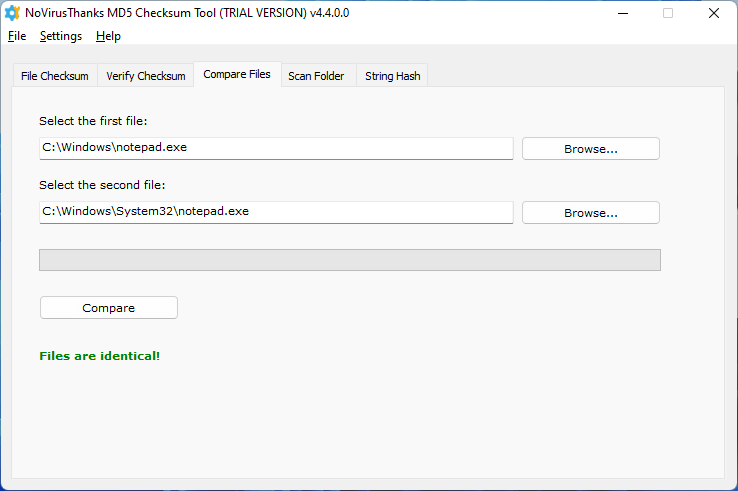
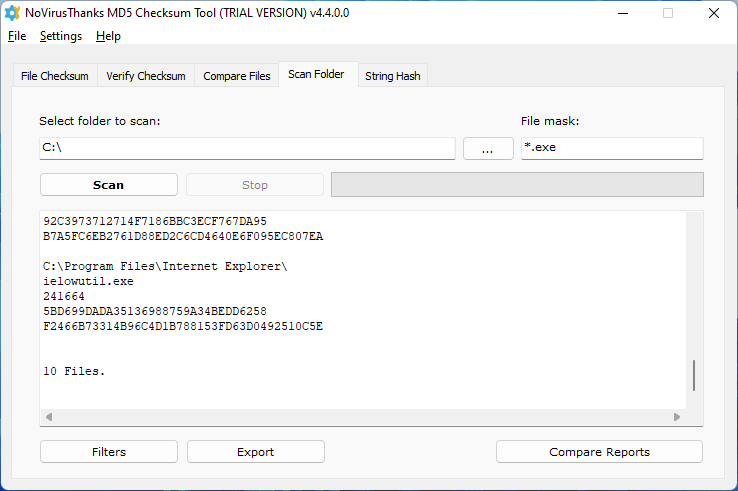
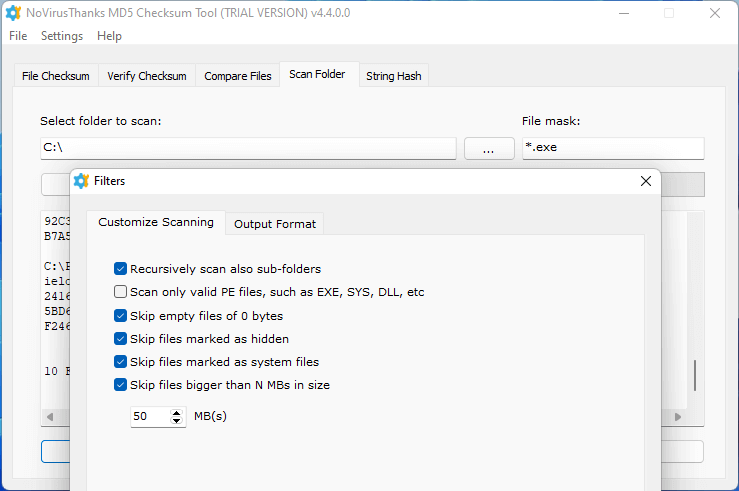
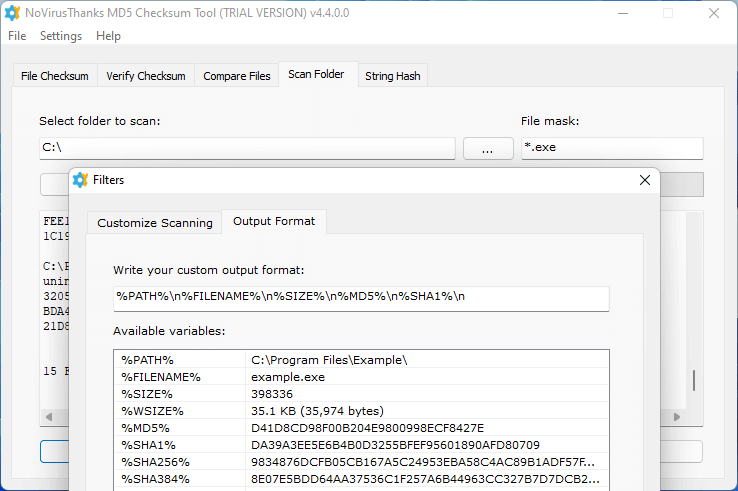
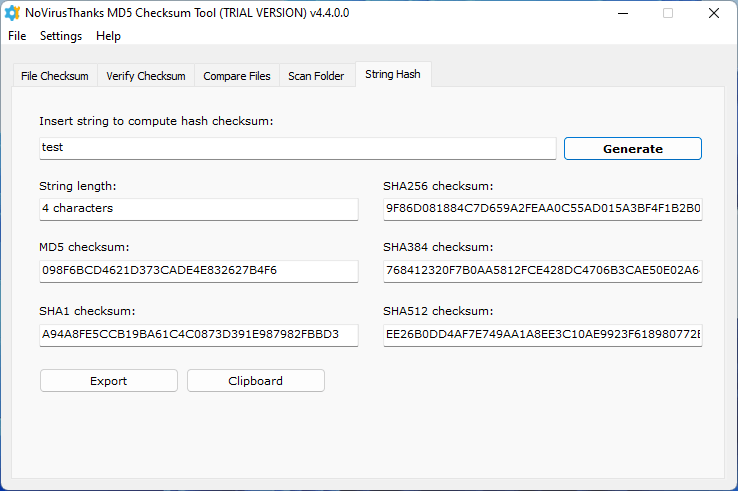
MD5 Checksum Tool is a smart and easy to use Windows OS application designed to allow
users to generate the file checksum
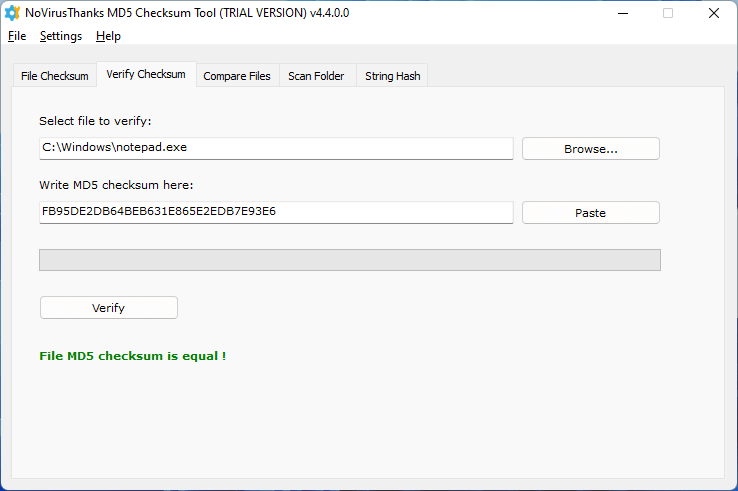
(MD5/SHA hash) of a file or string. It can be particularly useful to check if an executable (.exe) file is legit, in other words,
if it is the official release
from the offical author. The file and string hashing algorithms supported are
MD5, SHA1, SHA256, SHA384 and SHA512.
For Windows 7 SP1, 8, 8.1, 10, 11 (32/64-bit)
Autoit Script Decompiler Free //top\\ Full
The official AutoIt Wiki is very clear: reverse engineering scripts is a violation of their EULA. In fact, just mentioning a third-party decompiler on their community forums can get you banned. While decompilation for personal recovery or security research is often considered "fair use" in some regions, it remains a contentious topic. 3. Tools of the Trade
Stripping out all human-readable variable names and replacing them with random strings (e.g., $Local_Var becomes $o_0x8F9A ). Removing all comments and documentation lines. Flattening control flow loops to confuse readers. Encrypt Sensitive Data
To effectively decompile an AutoIt script, it helps to understand how the compilation process works in the first place. autoit script decompiler free full
However, a persistent problem plagues the AutoIt ecosystem: what happens when you lose the original source code of a compiled script? Perhaps you compiled a script years ago and only have the .exe file remaining. Perhaps you inherited a legacy AutoIt executable from a former employee and need to understand how it works. In these scenarios, an AutoIt decompiler becomes an invaluable tool for recovering lost source code.
Let's assume you have a legitimate need (e.g., you lost the source code for your own script). Follow these steps using . The official AutoIt Wiki is very clear: reverse
The tool will generate a .au3 text file. Open this file in or any text editor to view the recovered source code. The Challenge of Obfuscation
The most popular and widely used tool for this purpose is . It is often bundled with older versions of AutoIt or found on developer forums. Pros: Highly reliable for standard scripts. Status: Free. Flattening control flow loops to confuse readers
However, modern AutoIt (versions 3.3.14.0 and later) introduced the flag. Worse, third-party obfuscators like Obfuscator , CodeCrypt , or Themida can scramble the embedded script, making decompilation yield gibberish. Some scripts even use the #pragma compile(Out, MyProgram.exe) with password protection.
a reputable tool (e.g., MyAutToExe or similar community-driven forks). Open the decompiler tool. Select the compiled .exe file you wish to decompile. Define the output file ( .au3 file path). Click "Decompile" or "Extract."
Using a free AutoIt decompiler is generally straightforward. Here is the general workflow:
Alex’s journey to recover that lost work highlights the complex world of AutoIt decompilation 1. The Search for a "Full Free" Solution
The official AutoIt Wiki is very clear: reverse engineering scripts is a violation of their EULA. In fact, just mentioning a third-party decompiler on their community forums can get you banned. While decompilation for personal recovery or security research is often considered "fair use" in some regions, it remains a contentious topic. 3. Tools of the Trade
Stripping out all human-readable variable names and replacing them with random strings (e.g., $Local_Var becomes $o_0x8F9A ). Removing all comments and documentation lines. Flattening control flow loops to confuse readers. Encrypt Sensitive Data
To effectively decompile an AutoIt script, it helps to understand how the compilation process works in the first place.
However, a persistent problem plagues the AutoIt ecosystem: what happens when you lose the original source code of a compiled script? Perhaps you compiled a script years ago and only have the .exe file remaining. Perhaps you inherited a legacy AutoIt executable from a former employee and need to understand how it works. In these scenarios, an AutoIt decompiler becomes an invaluable tool for recovering lost source code.
Let's assume you have a legitimate need (e.g., you lost the source code for your own script). Follow these steps using .
The tool will generate a .au3 text file. Open this file in or any text editor to view the recovered source code. The Challenge of Obfuscation
The most popular and widely used tool for this purpose is . It is often bundled with older versions of AutoIt or found on developer forums. Pros: Highly reliable for standard scripts. Status: Free.
However, modern AutoIt (versions 3.3.14.0 and later) introduced the flag. Worse, third-party obfuscators like Obfuscator , CodeCrypt , or Themida can scramble the embedded script, making decompilation yield gibberish. Some scripts even use the #pragma compile(Out, MyProgram.exe) with password protection.
a reputable tool (e.g., MyAutToExe or similar community-driven forks). Open the decompiler tool. Select the compiled .exe file you wish to decompile. Define the output file ( .au3 file path). Click "Decompile" or "Extract."
Using a free AutoIt decompiler is generally straightforward. Here is the general workflow:
Alex’s journey to recover that lost work highlights the complex world of AutoIt decompilation 1. The Search for a "Full Free" Solution